

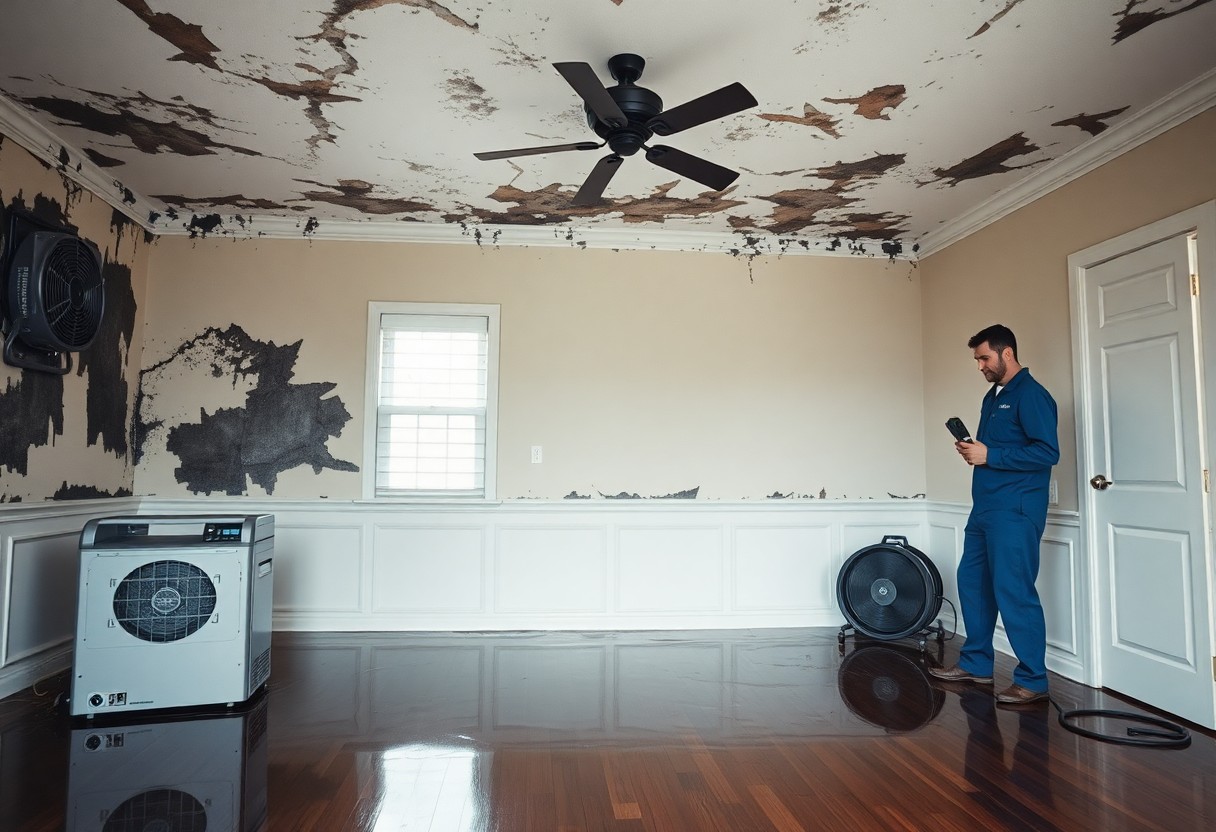
Why Is Timely Water Damage Remediation Critical To Prevent Mold?
Damage from leaks or floods demands immediate remediation to stop mold spores from taking hold and spreading through materials in your home; if you delay, moisture nourishes fast-growing colonies that compromise structural elements and your indoor air quality. You need prompt assessment, drying, and targeted restoration to limit health risks, reduce repair scope, and protect your property value.
Key Takeaways:
- Acting within 24-48 hours minimizes moisture and prevents mold spores from colonizing porous materials.
- Prompt remediation limits structural damage and reduces restoration and replacement costs.
- Quick drying and cleanup protect indoor air quality and reduce occupants’ exposure to allergens and harmful spores.
Understanding Water Damage
You must move quickly because water intrusion accelerates material degradation-within 24-48 hours microbial activity can begin and porous materials retain moisture, weakening drywall, framing, and insulation; delaying beyond 72 hours dramatically increases the labor and scope of remediation and the chance of mold colonization.
Types of Water Damage
You will face categories that dictate cleanup protocol: Category 1 (clean), Category 2 (gray), and Category 3 (black) water, plus distinctions between surface-only stains and structural saturation that requires drying, monitoring, and potential reconstruction.
- Category 1: freshwater leaks from supply lines or precipitation; low contamination risk.
- Category 2: gray water from dishwashers, washing machines, or some toilet overflows; moderate contamination.
- Category 3: black water from sewage or floodwater; requires full remediation and PPE.
- Structural vs. cosmetic: structural saturation affects framing, insulation, and floors; cosmetic damage is superficial staining.
- Assume that category, contamination level, and exposure time determine PPE, drying targets, and disposal procedures.
| Category 1 (Clean) | Source: supply lines, rain; Response: extract, dry 24-48 hrs, monitor for contamination. |
| Category 2 (Gray) | Source: appliances, sinks; Response: remove affected materials, sanitize, dry quickly. |
| Category 3 (Black) | Source: sewage, floodwater; Response: containment, PPE, demolition of porous materials. |
| Structural Damage | Examples: compromised joists, swollen subfloors; Response: moisture mapping, drying, possible replacement. |
| Surface Damage | Examples: paint blistering, stains; Response: cleaning, targeted repairs, verify substrate dryness. |
Common Causes of Water Damage
You often see damage from aging or frozen pipes, roof failures after storms, appliance malfunctions (water heaters, dishwashers, washing machines), clogged gutters, and sewer backups during heavy rain; a single burst pipe can release tens to hundreds of gallons per hour, so timely action limits spread.
For example, winter freeze-thaw cycles frequently cause pipe ruptures in poorly insulated cavities, while neglected roof flashings allow months of slow leaks that saturate attic insulation and ceiling joists; municipal sewer backups during heavy storms can introduce Category 3 contamination, and foundation seepage from poor grading produces chronic basement moisture that fosters mold if not corrected.
The Mold Growth Process
Spores are everywhere, and when your materials stay wet for 24-48 hours they germinate into hyphae that penetrate surfaces. Within 72 hours you may notice musty odors, and visible colonies typically appear in 3-7 days on porous substrates like drywall, carpet and wood. Temperatures of 20-30°C (68-86°F) and relative humidity above ~60% accelerate growth, while dust and cellulose provide the nutrients that let colonies expand rapidly.
Conditions Favoring Mold Growth
When your indoor RH exceeds about 60% or surfaces remain damp from leaks, condensation, or flooding, mold finds ideal conditions. Porous, cellulose-rich materials-drywall, paper-backed insulation, untreated wood, carpet padding-act as both food and habitat. Poor ventilation, stagnant air, and temperatures in the 68-86°F range speed colonization. For example, a slow roof leak often produces visible staining along seams within one week if not dried.
The Timeline for Mold Development
Germination can begin within 24-48 hours on wet materials; visible growth and discoloration commonly appear in 3-7 days, and spore production may start between 5-14 days depending on conditions. In a typical field case, a burst pipe left carpet saturated and produced visible mold in 72 hours and heavy colonization in two weeks. Your remediation priorities should reflect this rapid escalation.
Factors that alter the timeline include material type, moisture content, temperature and preexisting contamination. Wood at moisture content above ~16% supports fungal growth; industry guidance recommends drying materials within 24-48 hours to prevent colonization. Deploying air movers, dehumidifiers and removing wet porous materials can slow or stop progression, while cooler temperatures and low RH retard but do not eliminate risk.
Health Risks Associated with Mold
Mold exposure can provoke immediate and delayed health problems that affect your daily life and indoor safety; allergic rhinitis, persistent coughing, and asthma flare-ups are common, while people with weakened immune systems risk fungal infections such as invasive aspergillosis. If you want practical guidance on reducing those risks, consult Timely Water Damage Restoration | Blog for remediation timelines and methods proven to limit spore growth.
Allergic Reactions and Respiratory Issues
You may experience sneezing, nasal congestion, itchy eyes, and wheezing within hours of exposure to visible mold or a musty odor; people with asthma often see symptom intensity rise and may require increased medication. Even low-level indoor dampness can trigger acute reactions, and studies show prompt drying within 24-48 hours dramatically reduces the chance that these allergic responses will become recurrent problems in your household.
Long-term Health Effects
Prolonged exposure over months can lead to chronic sinusitis, persistent bronchitic symptoms, and increased likelihood of developing asthma-especially in children whose lungs are still developing. Certain species (e.g., Aspergillus, Stachybotrys) are linked to more severe outcomes and immune-compromised individuals face higher risk of systemic infections; addressing water damage quickly limits the duration of exposure that drives these long-term conditions.
Longer-term studies and occupational case series associate sustained dampness and mold with measurable declines in respiratory health and quality of life: increased doctor visits, repeated antibiotic courses for sinus or bronchial infections, and missed school or work. You reduce these downstream impacts by eliminating sources of moisture, replacing contaminated porous materials, and following documented remediation timelines to prevent months-to-years of chronic symptoms.
Importance of Timely Remediation
Swift remediation prevents mold from colonizing building materials; when you act within 24-48 hours you stop spores before hyphae penetrate porous surfaces. Studies and field experience show visible mold can appear within 48 hours in untreated cavities, increasing remediation steps and containment needs. For guidance on integrating remediation into your response plan, see Why Mold Remediation Should Be Part of Your Water …
Preventing Mold Growth
You minimize colonization by removing standing water, drying to below 60% relative humidity and replacing saturated porous materials within 24-48 hours. Carpets and insulation often require removal, while concrete and tile typically dry with dehumidification; industrial dehumidifiers can extract 20-40 gallons per day, speeding recovery and cutting hidden-growth risk.
Cost Implications of Delayed Action
If you postpone remediation, an initial cleanup costing $300-$2,000 can balloon into a $10,000+ restoration once mold spreads to framing, HVAC and finishes. Insurance coverage can be restricted for prolonged neglect, and added expenses include containment, negative-air setup, lab testing and demolition-each multiplying labor and disposal costs.
For example, a kitchen leak you extract and dry within 48 hours might total ~$1,200 for extraction and limited drywall replacement; left a week, that same event often requires mold testing, full drywall/insulation replacement, HVAC cleaning and containment, pushing invoices past $12,000 and extending displacement from days to weeks.
Effective Water Damage Remediation Strategies
When water infiltrates your home, prioritize rapid, methodical actions: stop the source, document damage, and deploy drying equipment within 24-48 hours to limit mold growth. Industrial dehumidifiers (20-50 gallons/day) and high‑velocity air movers work far better than consumer fans for removing moisture from wall cavities and subfloors. You should consult resources like the Importance of Water Damage Restoration for drying goals and escalation criteria.
Immediate Response Actions
Immediately shut off the water source and electricity to affected areas if safe, then remove saturated items you can handle-carpets, padding, and porous contents-within 24-48 hours. You should photograph damage for claims, use PPE, and deploy portable dehumidifiers and axial fans; note that DIY drying often misses moisture in cavities, so monitor with a moisture meter and log temperature and relative humidity to track progress.
Professional Remediation Services
Hire IICRC‑certified technicians when damage is widespread or involves structural materials; they perform moisture mapping, containment, negative‑air HEPA filtration, and follow S500 protocols to prevent cross‑contamination. You’ll receive moisture targets, progress reports, and clearance testing to confirm materials are dry before reconstruction begins.
Technicians start with a detailed inspection and moisture mapping using infrared imaging and pin/non‑contact meters, then stage air movers (typically 2,000-4,000 CFM each) and LGR or desiccant dehumidifiers sized to the load; drying a 2,000 sq ft home commonly takes 3-5 days, while complex losses can require 7-14 days. You should expect coordinated steps-removal, antimicrobial application, structural drying, and rebuild estimates-plus documentation for insurance and post‑remediation clearance testing.
Post-Remediation Steps
After remediation, establish a documented follow-up plan that includes moisture verification, air sampling, and physical inspections; use a moisture meter to confirm wall/joist moisture levels below 15% and a hygrometer to keep relative humidity between 30-50%; schedule a third-party clearance test per IICRC S520 within 48-72 hours for high-risk losses and again at 7-14 days if needed; log readings and photos so you can prove dryness and track trends should hidden moisture persist.
Monitoring for Mold
Conduct active monitoring for 30 days, inspecting weekly for discoloration, peeling paint, and musty odors; use a hygrometer to keep indoor RH ≤50% and a moisture meter to check materials (concern if >16% in wood); employ thermal imaging to find concealed wet pockets and perform surface or air sampling if you detect odors or symptoms-a 2019 restoration case showed visible regrowth within 10 days when RH remained at 62%, illustrating the need for rapid detection.
Preventative Measures
You reduce recurrence by controlling sources: maintain indoor relative humidity at 30-50% with a dehumidifier sized to the room (30-70 pints/day for basements), service HVAC and replace MERV 8-13 filters every 3 months, ensure roof leaks are patched within 72 hours, and grade soil to slope at least 6 inches over 10 feet away from the foundation; install gutter guards and vent attics at a 1:150 ventilation ratio to prevent condensation.
For sizing, select a dehumidifier matched to square footage and moisture load-e.g., a 1,500 sq ft basement typically needs 50-70 pints/day; pick MERV 8 for standard homes or MERV 13 for allergy-prone spaces; perform biannual exterior inspections (gutters, downspouts, seals), keep a maintenance log with photos, and in one multifamily retrofit correcting grading plus adding a 70-pint dehumidifier cut mold complaints by 85% within two months.
To wrap up
Taking this into account, you must act quickly when water damage occurs to stop moisture, limit structural harm, and prevent mold spores from establishing; prompt remediation reduces scope, lowers health risks, and protects your property value, so engage qualified professionals, dry affected areas thoroughly, and monitor for hidden dampness to keep mold from taking hold.
Damage right now? We’re ready.
24/7 emergency dispatch across Charlotte. The faster you call, the more we can save. Free assessment, insurance handled.