

What Factors Affect How Much Water Damage Remediation Costs?
You can assess water damage remediation costs by examining the damage category and source, square footage and materials affected, required extraction and drying time, mold abatement and structural repairs, accessibility and labor rates, and whether your insurance covers mitigation-knowing these factors helps you set realistic expectations and prioritize prompt action to control costs.
Key Takeaways:
- Extent and contamination level of the water: larger affected areas, porous materials, and black water require more labor, disposal, and specialized cleaning, raising costs.
- Time to response and remediation complexity: delays increase mold growth and structural damage; specialized drying, antimicrobial treatments, or demolition add expenses.
- Access, materials, and insurance: hard-to-reach locations, damaged electrical/HVAC or high-end finishes increase labor and replacement costs; insurance coverage and deductibles affect out-of-pocket expense.
Types of Water Damage
Your remediation costs hinge on source, exposure time, materials affected and contamination level. A broken supply line that soaks drywall usually requires extraction and drying, while sewage or floodwater forces demolition and full sanitation. Acting within 24-48 hours can limit mold growth and reduce structural repairs; delayed action often multiplies labor and disposal fees.
- Source: clean supply lines, appliances, or storm runoff.
- Duration: hours versus days – mold risk rises after ~48 hours.
- Materials: porous materials like carpet and insulation drive costs higher.
- Assume that contamination level directly increases your scope, PPE needs, and disposal expenses.
| Type | Typical causes and cost impact |
|---|---|
| Category 1 – Clean Water | Burst supply lines, appliance leaks; lowest remediation cost, often limited to extraction and drying. |
| Category 2 – Gray Water | Dishwashers, washing machines, toilet overflows (no feces); requires sanitation and possible material removal. |
| Category 3 – Black Water | Sewage, floodwaters; highest cost due to demolition, disposal, and full disinfection. |
| Structural/Mold | Prolonged moisture leads to mold remediation and structural repairs, often the largest single expense. |
Category 1: Clean Water
You encounter clean water from supply-line breaks or rain entering through intact roofing; contamination risk is minimal initially. Typical steps include rapid extraction, industrial drying, and monitoring moisture levels for 24-72 hours. For example, drying a 300 sq ft carpeted room often requires 1-3 days of equipment and minimal demolition, keeping costs comparatively low.
Category 2: Gray Water
You face gray water when appliance overflows or sink backups bring moderate contaminants like food particles, detergents, or urine. Response includes extraction, antimicrobial treatment, and selective removal of affected porous materials; failure to act quickly can push the job into Category 3. Treatment commonly raises labor and disposal expenses by roughly 50-100% versus clean-water jobs.
You should expect scenarios such as a washing machine overflow soaking 400 sq ft of carpet: technicians typically remove carpet and pad, apply antimicrobial agents, and dry the subfloor, which can add several hundred to a few thousand dollars depending on disposal and replacement needs. Containment and documentation for insurance are often necessary.
Category 3: Black Water
You deal with black water when sewage backups, sewer line failures or floodwaters enter your space; pathogens and chemical hazards are present. Full PPE, containment, destructive removal of porous materials, HEPA filtration, and commercial-grade disinfection are standard. Costs commonly run 2-3× higher than clean-water jobs due to labor intensity and hazardous waste disposal.
You should plan for multi-day crews, regulated waste hauling, and possible structural repairs after a black-water event. For instance, a basement sewage intrusion that soaks insulation and drywall will usually require gutting to studs, antimicrobial remediation, and verification testing before rebuilds begin, which significantly increases timeline and budget.
Extent of Damage
The extent of damage determines scope and cost-from isolated wet carpet or a stained baseboard to full structural saturation and pervasive mold. Minor jobs often fall under $1,000, moderate remediations typically range $1,000-$15,000, and severe losses frequently exceed $15,000; your insurance coverage and required repairs will affect the final total.
Minor Damage
When water is confined to one room for less than 24-48 hours, you’ll usually face cosmetic issues like wet carpet, surface stains, or swollen trim. Typical remediation runs $200-$1,000; you can often handle drying with rented air movers and dehumidifiers, plus spot-cleaning or a small drywall patch by a local technician.
Moderate Damage
Moderate damage spans multiple rooms or 48-72 hours of exposure, causing saturated insulation, partial drywall removal, and early mold colonization. Costs commonly sit between $1,000 and $15,000; you’ll require moisture mapping, commercial dehumidification, containment, and often HVAC or air-quality testing to document clearance.
In a typical two-bedroom apartment claim, technicians removed 150-300 sq ft of carpet and about 200 sq ft of drywall, ran dehumidifiers for five days, and used HEPA filtration-totaling roughly $8,500. You’ll see estimates broken into demolition, drying, antimicrobial treatment, and final testing so you can compare contractor bids precisely.
Severe Damage
Severe cases involve sewage, prolonged standing water beyond 72 hours, or structural and electrical compromise with widespread mold. Remediation starts around $15,000 and can exceed $100,000; you’ll need licensed contractors, structural repairs, mold abatement, and multi‑trade coordination for full restoration.
For example, a house with a flooded foundation and 12 inches of standing water required floor and joist replacement, full HVAC cleaning, sewage remediation, and mold abatement-remediation plus repairs ran about $70,000, took three weeks, and involved permit inspections. Your insurer may cover parts, but deductibles and code-upgrade costs can increase your out-of-pocket amount.
Location of Damage
Where water hits your property changes scope and price: a basement full of standing water requires pumps and sewage precautions, while an upstairs leak can damage multiple rooms below. For more detail on how site-specific factors drive expenses, see Factors That Affect Water Damage Restoration Cost, including examples of drying times and containment strategies.
Basement
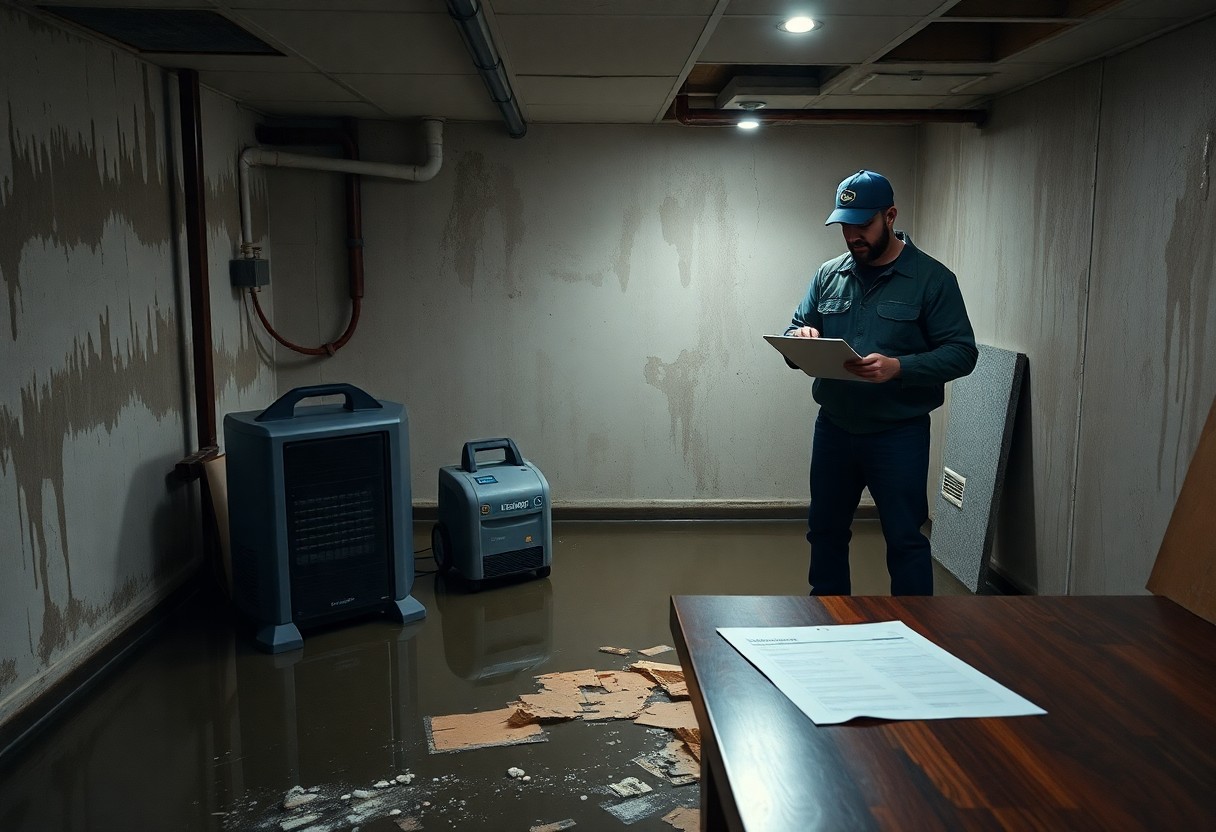
When your basement floods you face darker, more complex work: standing water removal, sump pump checks, and potential sewage contamination that raises cleanup class and cost. Mold can begin within 24-48 hours, so technicians often use submersible pumps, commercial dehumidifiers, and containment barriers; an average 1,000 sq ft basement may take 48-96 hours to dry depending on materials and access.
Ground Floor
Water on the ground floor typically affects flooring, baseboards, and appliances, and is easier to access for crews, lowering labor compared with enclosed spaces. Hardwood and laminate can warp within days, so you may need moisture mapping and drying mats; addressing 500-1,000 sq ft often involves 24-72 hours of active drying and targeted removals.
More intensive ground-floor damage often comes from category 2-3 sources-dishwasher or sewer backups-requiring sanitary remediation and subfloor replacement. For example, a kitchen flood that soaks a 200 sq ft area may necessitate tile removal, insulation replacement, and electrical checks, extending the job to several days and adding contractor and disposal fees.
Upper Floors
Leaks on upper floors frequently affect ceilings and rooms below, so your job includes not only the source room but ceiling demolition, drying of joists, and patching; water tends to track along beams, spreading damage. Insurance adjusters often look for secondary impacts like ruined insulation or stained drywall when assessing claims.
When an upstairs bathroom fails, you may have to demolish ceilings in one or more downstairs rooms, test wiring, and remove wet insulation-tasks that increase coordination and cost. Crews commonly use negative-air machines and access panels to dry concealed cavities; typical drying windows run 48-96 hours, but remediation can stretch to a week if structural repairs are needed.
Type of Property
Your property type directly affects labor, equipment, and regulatory needs; small homes might need carpet and drywall drying while large sites require industrial dehumidifiers and permits. For a detailed breakdown of how property categories change estimates, see Water Damage Restoration Costs: Factors That Influence the Price, which shows examples by square footage, material types, and typical line-item costs.
Residential
If you own a single-family home, expect baseline restoration from about $1,200 to $7,000 for typical incidents depending on 1,000-3,000 sq ft scale, water category, and materials; hardwood floor replacement can add $4-$8 per sq ft, while mold remediation often costs $500-$6,000. You’ll also face higher bills for staged content cleaning, attic or crawlspace work, and replacements covered differently by insurance.
Commercial
Commercial properties push costs higher because you must factor in larger square footage, code compliance, and downtime; small retail spaces (2,000-5,000 sq ft) frequently run $5,000-$30,000, while multi-tenant offices quickly escalate due to HVAC, data rooms, and fire-suppressions systems. You’ll pay more when tenant coordination, phased closures, and local permits are required.
In practice, a 10,000 sq ft office building with carpet, suspended ceilings, and a server closet often requires staged remediation: initial extraction and drying ($8,000-$20,000), contents and electronics specialists ($3,000-$15,000), plus permit and inspection fees; business interruption costs can exceed direct remediation if you don’t act fast, so your timeline directly impacts final price.
Industrial
Industrial sites introduce heavy equipment, hazardous materials, and large open volumes that drive costs: warehouses and plants commonly range from $50,000 to $250,000 for major events, largely due to needed cranes, industrial dryers, and specialized crews. You’ll also face strict EPA or OSHA compliance when fuels, oils, or process chemicals are involved, raising disposal and testing expenses.
For example, a 50,000 sq ft manufacturing floor contaminated by process water often requires HAZMAT assessment, PPE teams, and licensed waste hauling-adding tens of thousands to remediation. You should budget for structural assessments, possible concrete remediation, and extended shutdown periods; those factors dominate industrial project pricing more than raw square footage alone.
Time Factors
Time increases costs quickly: mold can begin in 24-48 hours, electrical risks rise by 72 hours, and structural problems may appear within a week. Salvage rates fall fast-carpet salvageable within 24 hours (~80%) often becomes replacement after 72 hours, adding $1,000-$3,000 per room. Equipment and labor climb daily.
- 24-48 hours: mold germinates and odors develop.
- 72 hours: drywall, insulation, and carpet often need removal.
- >7 days: reconstruction and structural repairs likely required.
Time of Exposure
When water soaks materials, porous items like drywall and insulation trap moisture; within 24-48 hours mold colonies form and hide in cavities. You lose salvage options quickly-salvage odds around 80% if dried within a day, dropping below 30-40% after 72 hours. For example, a wet bedroom often costs $1,500 to restore if acted on fast, but can exceed $5,000 if drywall and framing must be replaced.
Speed of Response
Your immediate actions determine which services are needed: emergency extraction within 1-4 hours can cut drying time by up to 50% and reduce overall costs by thousands. Insurers commonly expect mitigation within 48 hours to limit liability. A field example showed homes serviced within 24 hours averaged about $4,200 in repairs versus $11,800 when response lagged beyond 72 hours.
Faster response lets technicians deploy truck-mounted extractors, multiple air movers (4-8 per room), and industrial dehumidifiers to prevent secondary damage; daily equipment rental typically runs $150-$600, plus emergency dispatch fees of $200-$800. You therefore save on demolition, mold remediation, and reconstruction when crews act quickly, while delays often multiply costs due to hidden mold and structural compromise.
Additional Costs
Beyond drying and deodorizing, you can face add-ons like permit fees ($100-$1,000), temporary housing ($100-$250/night), content storage, and specialized disposal for contaminated materials; mold remediation alone often adds $3,000-$7,000 on average. For a detailed breakdown of common drivers and real-case estimates, review TOP 10 FACTORS THAT AFFECT THE COST OF WATER DAMAGE RESTORATION.
Repairs and Replacements
Structural repairs and material replacement drive costs: drywall replacement runs roughly $1.50-$3.50/ft², hardwood replacement $3-$8/ft², and HVAC/duct work can add $300-$2,000. If your framing, joists, or subfloor are compromised, expect contractor rates and permit work to push totals substantially higher-often doubling simple restoration estimates.
Insurance Coverage
Your policy type and deductible determine out‑of‑pocket costs: standard homeowners typically cover sudden pipe bursts but exclude flood damage, with deductibles commonly $500-$2,500. You should document damage immediately, file a claim within 24-48 hours, and get itemized estimates to speed approvals and reduce the chance of denial for delayed mitigation.
When claims are approved, carriers often cover 80-100% of repair costs after deductible for covered perils, but depreciation, sublimits (like $1,500 for contents), and exclusions (sewer backup without endorsement) can leave gaps. Keep invoices, photos, and mitigation receipts; getting a contractor’s scope-of-work and a signed proof-of-loss form strengthens your position during disputes.
Environmental Assessment
Testing for mold, sewage contaminants, asbestos, or lead adds both time and cost: single mold tests typically run $200-$600, asbestos sampling $400-$800, and sewage remediation can escalate costs due to disinfection and PPE requirements. If your property dates before the 1990s, you should assume higher environmental scrutiny.
Assessment workflows include surface and air sampling, lab analysis (24-72 hours), and clearance testing after remediation. When hazardous materials are found, abatement contractors use containment and HEPA filtration, increasing labor and equipment charges by 30-50% compared with non‑hazardous jobs.
Final Words
Upon reflecting, the cost of water damage remediation depends on how extensive the damage is, the water contamination level, the materials affected, how quickly you act, and whether mold remediation or structural repairs are needed; accessibility, regional labor rates, emergency response and insurance coverage also shape your final bill, so you should assess these factors promptly to estimate and manage expenses effectively.
Damage right now? We’re ready.
24/7 emergency dispatch across Charlotte. The faster you call, the more we can save. Free assessment, insurance handled.