

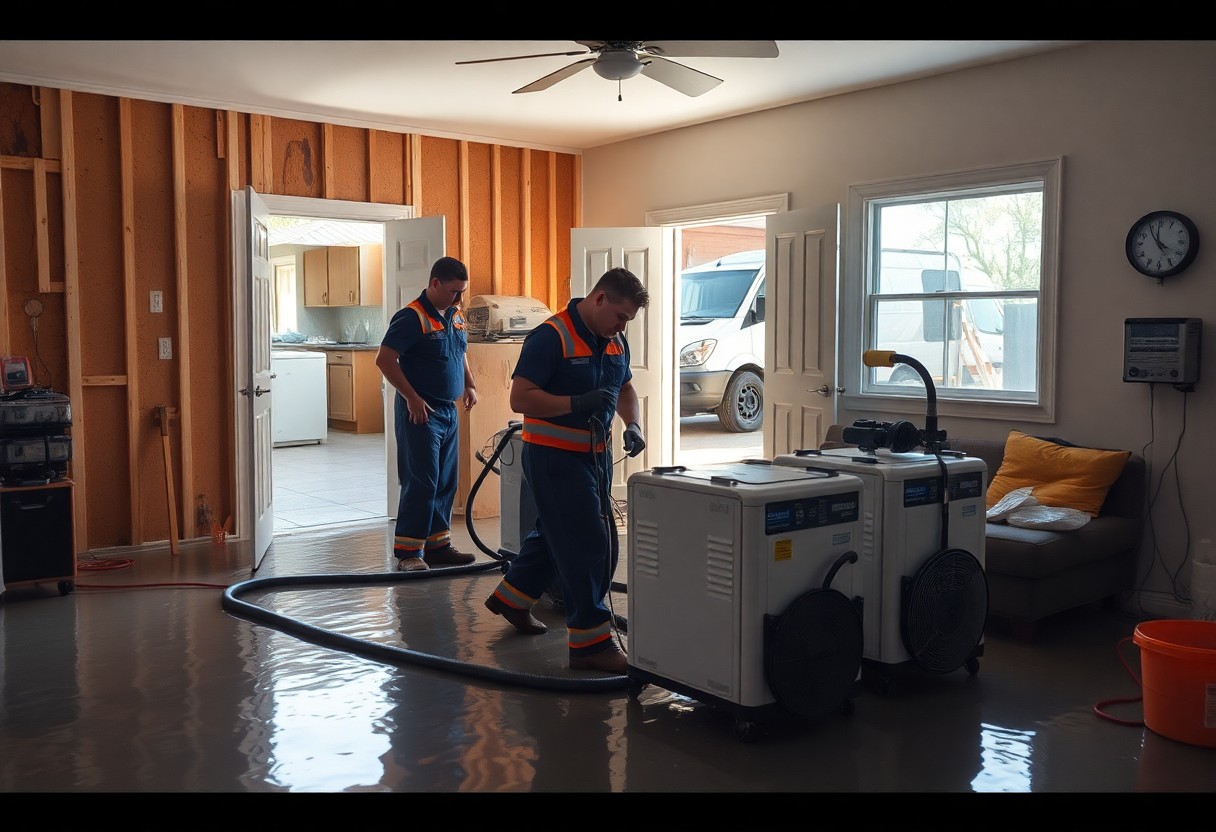
How Can A Water Damage Company Help You Recover Faster?
There’s no time to waste when water invades your home; a professional water damage company can assess damage quickly, stop leaks, remove standing water, deploy industrial drying equipment, prevent mold growth, sanitize affected areas, coordinate with insurers, and restore structures and belongings so you recover faster and with less long-term loss.
Key Takeaways:
- Rapid response and professional water extraction limit structural and mold damage, accelerating drying and reducing the scope of repairs.
- Expert assessment, moisture mapping, and proper sanitation guide targeted repairs and uncover hidden issues before they worsen.
- Insurance documentation and coordinated claim support speed reimbursement, while experienced crews provide efficient cleanup, reconstruction, and prevention advice.
Understanding Water Damage
Types of Water Damage
You need to distinguish Category 1 (clean water from supply lines), Category 2 (grey water from appliances with some contaminants), and Category 3 (black water from sewage or floods), plus surface flooding and hidden moisture in walls or under floors; each demands different extraction, drying, and sanitization protocols, with Category 3 requiring full protective measures and disposal of unsalvageable materials.
- Category 1 – fresh supply-line leaks (quick mitigation often prevents loss)
- Category 2 – appliance failures like dishwashers or washing machines
- Category 3 – sewage backups and floodwaters requiring full remediation
- The fastest, most destructive sources are burst supply lines and sewer failures
| Category 1 (Clean) | Supply lines, faucets – low contamination, salvage possible |
| Category 2 (Grey) | Washing machines, dishwashers – moderate contamination, some materials affected |
| Category 3 (Black) | Sewage, floodwaters – high contamination, removal of porous materials |
| Surface Flooding | Storm runoff – large volumes, structural and contents risk |
| Hidden Moisture | Slow leaks behind walls/floors – mold risk, often found with moisture meters |
Common Causes of Water Damage
You encounter most claims from aging plumbing, frozen pipes when temperatures drop below 32°F (0°C), appliance failures (water heaters, washing machines, dishwashers), roof or gutter failures, and sewer backups; water heaters typically fail after 8-12 years, and hoses over 5 years old raise leak risk, so those timelines help prioritize inspections and replacements.
When a supply line fails, it can flood a room within minutes and release hundreds of gallons over hours, turning salvageable contents into loss if not addressed; insurers generally expect you to act promptly – shutting off the main, documenting damage, and calling a water damage company within 24-48 hours for extraction, drying, and moisture mapping to limit structural damage and mold growth.
The Role of a Water Damage Company
A water damage company focuses on containment, mitigation, and documentation to get you and your property back to normal faster. Technicians follow IICRC S500 standards, deploy industrial extractors and dehumidifiers to reduce drying times to 24-72 hours in many living spaces, and manage insurance documentation so you don’t. For residential needs, see Residential Water Damage and Cleanup Repair Services for typical services and timelines.
Immediate Response
You should expect 24/7 emergency response with crews often arriving within 60-90 minutes to stop the source, secure utilities, and begin extraction. Portable pumps moving 20-40 gallons per minute remove standing water quickly, while temporary measures-tarps, board-ups, or sandbags-prevent further damage so drying and repairs can start immediately.
Assessment and Inspection
Technicians perform moisture mapping using infrared cameras, hygrometers, and penetrating meters to find hidden moisture in walls, floors, and cavities. They classify the water (Category 1-3) and the loss (Class 1-4) per industry standards, producing documented scope and estimate details that streamline your insurance claim and set realistic drying timelines.
Categorization changes the approach: Category 1 allows on-site drying, Category 2 may require removal of porous materials, and Category 3 demands containment, PPE, and disposal of contaminated items. Class 4 losses-saturated hardwood, plaster, or masonry-often need specialty equipment (heat mats, low-grain refrigerant or desiccant dehumidifiers) and can extend drying to 5-10 days depending on conditions, so you know what to expect for cost and timeline.
Water Extraction and Mitigation
Fast, targeted extraction reduces structural soak time and limits demolition you’ll face later; technicians prioritize stopping the source, removing standing water, and setting a drying plan within the first 24 hours. You’ll notice crews using containment barriers, quick antimicrobial applications for Category 2/3 events, and continuous moisture logging so repairs and insurance claims proceed without avoidable delays.
Equipment Used
You’ll see truck-mounted pumps that can remove hundreds to thousands of gallons per hour for major losses, portable submersible pumps handling 10-50 GPM in confined areas, extraction wands for carpets, and high-velocity air movers delivering ~2,000-3,200 CFM. Technicians also use refrigerant or desiccant dehumidifiers (50-200 pints/day capacity), moisture meters, and thermal cameras to locate hidden wet pockets.
Steps in Water Extraction
First responders assess water category and safety, then stop the source and remove bulk water using pumps and wands; next they pull wet materials (padding, baseboards) as needed, install air movers and dehumidifiers, and monitor moisture and humidity every 24 hours. You’ll get a documented drying goal-often achieving normal moisture levels within 3-5 days with proper equipment and follow-up.
For example, a kitchen flood with 1,200 gallons removed in under two hours allowed technicians to hit target dew points within 36 hours and reduce structural moisture to baseline by day four. You should expect daily moisture maps, photographs for claims, and adjustments to airflow or dehumidification when progress stalls; technicians also perform post-dry inspections to confirm no hidden moisture remains before repairs begin.
Restoration Process
After mitigation, the restoration process coordinates inspection, extraction, drying, cleaning, and rebuild; because mold can begin in 24-48 hours, a swift plan reduces secondary damage. Technicians document with moisture readings and thermal imaging, working with your insurer to streamline claims. For more on response times and methods see Quick Water Damage Clean Up-Why Is It Important?
Drying and Dehumidification
Drying uses air movers, axial fans and LGR dehumidifiers to lower building humidity to baseline; technicians typically place 2-6 air movers per affected room and monitor progress with moisture meters and hygrometers every 24 hours. You’ll see recorded readings that guide air flow adjustments and containment to protect unaffected areas.
Repairing and Replacing Damaged Materials
Repairs address structural and finish elements: drywall is often removed 12 inches above the visible waterline, insulation and carpet are replaced, subfloor repairs are completed and electrical/plumbing inspections ensure safety. You’ll receive a prioritized scope with cost estimates and timelines to restore occupancy quickly and compliantly.
Beyond basic replacement, technicians match materials, using moisture‑resistant drywall, pressure‑treated decking and EPA‑registered antimicrobials when needed; color matching and trim work are scheduled last. Typical small repairs run 3-7 days, while full reconstruction may take several weeks – your contractor should provide photo documentation and coordinate with adjusters for faster resolution.
Insurance and Claim Assistance
When you file a claim, a water damage company assembles itemized scopes, Xactimate-style estimates, moisture maps, and drying logs insurers expect; for a detailed look at that role see Water Damage Restoration Company: What They Really Do? These documents can shorten adjuster reviews from weeks to days and often increase recoverable losses by 10-30% in complex claims.
Navigating Insurance Claims
You get help scheduling adjuster inspections, documenting immediate mitigation (typically within 24-48 hours), and distinguishing covered versus excluded items. Companies usually submit an initial scope within 48 hours and communicate directly with insurers, which helps secure adjuster visits in 3-7 business days and reduces scope disputes that delay payments.
Documentation and Reports
You receive timestamped photos, thermal images, room-by-room inventories, and moisture readings that substantiate each line item on a claim. For example, a drying log showing relative humidity dropping from 70% to 45% over four days plus hourly equipment run-time proves ongoing mitigation and supports approval for continued work.
Beyond basics, you get formal scope-of-loss reports listing square footage, affected materials, and Xactimate-format estimates with labor, materials, and disposal costs; chain-of-custody logs for packed-out contents and signed drying certifications demonstrate compliance. Providing contractor license numbers, equipment serials, and final moisture readings (e.g., wood moisture content in the 6-10% range) speeds adjuster decisions on repair versus replace items.
Preventative Measures and Tips
Regular inspections and targeted upgrades cut your future losses: clean gutters 2-4 times a year, install backflow preventers on sewer lines, and raise appliances and electrical panels above expected flood levels; seal foundation cracks and maintain proper grading to divert water.
- Gutter cleaning every season
- Sump pump with battery backup
- Install flood sensors in basements
Maintenance to Prevent Future Damage
You should check your roof and attic after major storms, replace damaged shingles promptly, inspect window and door seals annually, test your sump pump monthly, swap battery backups every 3-5 years, and book a professional plumbing inspection every 2-3 years to catch hidden leaks or corroded fittings before they fail.
Emergency Preparedness
Keep a compact water-damage kit with a shop vacuum, a dehumidifier rated 50-70 pints/day, plastic sheeting, heavy-duty gloves, LED floodlights, and spare batteries; store digital photos of valuables offsite, save your insurer and contractor contacts on your phone, and map evacuation routes so you can act within the first 24-48 hours.
When water enters, shut off utilities at the main only if it’s safe, photograph damage with timestamps, move irreplaceables to higher ground, and call your water damage company immediately – studies show professional response within 24 hours can reduce secondary mold growth by over 50%; keep a log of all calls, estimates, and receipts to streamline claims and recovery.
To wrap up
The rapid response, professional equipment, and coordinated restoration plan a water damage company provides help you limit structural and mold damage, speed drying, and salvage your belongings; by managing insurance claims and supplying documented reports, they reduce downtime and restore your property efficiently so you and your household can return to normal sooner.
Damage right now? We’re ready.
24/7 emergency dispatch across Charlotte. The faster you call, the more we can save. Free assessment, insurance handled.